
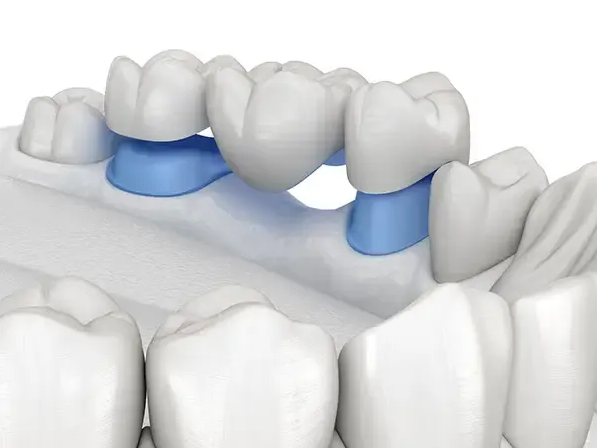
A dental bridge is a restorative option used to replace one or more missing teeth. It “bridges” the gap by anchoring an artificial tooth (or teeth) to the natural teeth on either side of the space or, in some cases, to dental implants. The goal is to restore chewing function, improve speech clarity, support facial structure, and prevent the shifting that can occur when teeth are missing. For patients in Canby, OR, Beckley Family Dental Group uses dental bridges to help rebuild comfortable function and a natural-looking smile.
When a tooth is lost, the surrounding teeth can gradually drift into the open space. This movement can change your bite, create uneven pressure when chewing, and make some areas harder to clean. Over time, that can increase the risk of gum inflammation, decay, and jaw discomfort. Replacing missing teeth with a bridge helps keep teeth in their proper positions and supports a healthier bite.
A bridge can be a practical choice when you want a fixed replacement that does not come in and out like a removable partial denture. It is also often faster than some other tooth replacement paths, depending on the type of bridge and the condition of neighboring teeth.
What is a Dental Bridge?
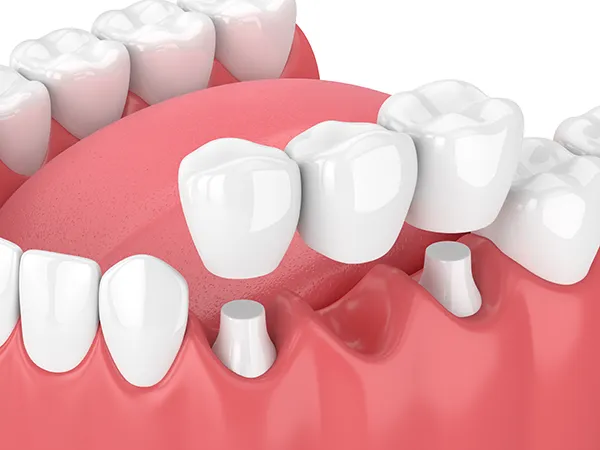
A dental bridge is a fixed dental restoration designed to replace missing teeth. The replacement tooth is called a pontic, and it is held in place by support on one or both sides of the gap. Traditional bridges typically rely on the natural teeth adjacent to the space, called abutment teeth, which are shaped to receive crowns that support the bridge. Other bridge designs may bond to the back of neighboring teeth or attach to implants.
Bridges are made to look and function like natural teeth. They are customized to match the shape, size, and color that blends with your smile. A properly designed bridge should feel stable when you chew and speak, and it should be shaped to allow effective cleaning around the gumline.
When is a Dental Bridge Recommended?
A bridge may be recommended when you have one or more missing teeth and the neighboring teeth or implants can provide stable support. The best candidates depend on oral health, gum condition, bite forces, and the location of the missing tooth or teeth.
Common reasons a dental bridge may be recommended include:
- Replacing a missing tooth to restore chewing comfort and efficiency
- Preventing nearby teeth from shifting into the space
- Improving speech clarity when missing teeth affect pronunciation
- Restoring a more even bite and reducing strain on other teeth
- Enhancing appearance by filling a noticeable gap in the smile
- Supporting facial structure by maintaining tooth position and spacing
If the supporting teeth have significant decay, fractures, or gum issues, those concerns may need to be addressed first. In some cases, another solution such as an implant-supported restoration may be more suitable, especially when neighboring teeth are healthy and you want to avoid reshaping them.
Types of Dental Bridges
There are several types of dental bridges, and the best option depends on where the missing tooth is located, how much support is available, and the condition of neighboring teeth.
Traditional dental bridge
This is one of the most common types. The teeth on either side of the gap are prepared for crowns, and the pontic is connected between them. Traditional bridges can be strong and stable when the supporting teeth are healthy enough to hold crowns.
Cantilever bridge
A cantilever bridge is supported on only one side of the gap. It may be used in select situations where there is only one suitable supporting tooth, though it is not ideal for areas with heavy chewing forces because it can place more leverage on the supporting tooth.
Maryland (bonded) bridge
A bonded bridge uses “wings” that attach to the back of neighboring teeth rather than full crowns. This approach can be more conservative because it often requires less tooth reduction. It is typically used in areas with lower bite pressure and when the adjacent teeth are strong and healthy.
Implant supported bridge
Instead of relying on natural teeth, an implant-supported bridge is anchored by dental implants. This can be a strong option for replacing multiple missing teeth in a row, and it helps preserve neighboring teeth because they do not need to be reshaped for crowns. Implant planning depends on bone health, healing timelines, and overall oral conditions.
What to Expect During the Dental Bridge Process
Getting a dental bridge typically involves careful planning, preparation, and final placement. The steps vary based on the type of bridge, but many cases follow a similar process.
A typical bridge process may include:
- Evaluation and imaging to assess gum health, supporting teeth, bite alignment, and the size of the gap
- Preparing the supporting teeth if a traditional bridge is planned, including shaping them to receive crowns
- Taking impressions or digital scans so the bridge can be custom-made for a precise fit
- Placing a temporary restoration to protect prepared teeth while the final bridge is created
- Trying in and cementing the final bridge, followed by bite adjustments for comfort and function
If an implant-supported bridge is chosen, there is an additional surgical phase for implant placement and healing before the final bridge is attached. Your dental team will review your timeline and what to expect based on your treatment plan.
How a Dental Bridge Should Feel
A new bridge should feel stable and comfortable. It may take a short adjustment period to get used to how it feels against your tongue and cheeks, especially if you have been missing teeth for a while. Chewing should not cause sharp pain, and your bite should feel even. If the bridge feels too high or creates soreness when biting, a bite adjustment may be needed.
Speech can also feel slightly different at first, particularly if the missing teeth were in the front. Most people adapt quickly as the tongue relearns the tooth shapes and edges.
How to Care for a Dental Bridge
Daily care is essential for protecting the supporting teeth and the gums around a bridge. The bridge itself cannot develop cavities, but the natural teeth underneath the crowns and the exposed edges near the gumline can still decay if plaque builds up.
Helpful bridge care habits include:
- Brush twice daily with attention to the gumline around the crowns
- Clean between teeth every day using floss threaders, super floss, or interdental brushes
- Consider a water flosser to help flush plaque and debris around bridge edges
- Keep up with regular professional cleanings to monitor the bridge and gum health
- If you grind your teeth, ask about a nightguard to reduce stress on the bridge and supporting teeth
Cleaning under the pontic area is especially important. Food and plaque can collect where the bridge meets the gums. Your dental team can show you the best tools and techniques for your specific bridge design.
How Long do Dental Bridges Last?
The lifespan of a dental bridge depends on the type of bridge, the health of the supporting teeth, bite forces, and hygiene habits. A bridge can last many years when the margins are kept clean and the supporting teeth stay healthy. Common reasons a bridge may need repair or replacement include decay on the supporting teeth, gum disease, cement breakdown, chipping, or changes in bite and tooth alignment.
Signs a bridge may need evaluation include persistent bad taste, sensitivity at the crowned teeth, gum swelling or bleeding near the bridge, looseness, discomfort when chewing, or food trapping that is new or worsening.
Dental Bridge vs. Dental Implant
A bridge and dental implants both replace missing teeth, but they do so in different ways. A traditional bridge relies on neighboring teeth for support, which means those teeth are reshaped to receive crowns. An implant replaces the tooth root and supports a crown or bridge without needing to alter adjacent teeth. Implants can help preserve bone in the area, while bridges can be a faster fixed option for some patients, depending on oral health and treatment goals.
The right choice depends on factors like the number of missing teeth, bone health, the condition of neighboring teeth, budget considerations, and how quickly you want to complete treatment. A comprehensive exam helps determine which option is best for long-term stability and comfort.
FAQs
What happens if I do not replace a missing tooth?
Teeth around the gap can shift, which may lead to bite changes, uneven wear, and areas that are harder to clean. Over time, this can increase the risk of decay, gum issues, and jaw discomfort.
Is a dental bridge removable?
Most bridges are fixed, meaning they stay in place and are not removed for cleaning like a removable partial denture. Daily home care focuses on brushing and cleaning around and under the bridge.
How do I floss with a dental bridge?
Special tools such as floss threaders, super floss, or interdental brushes can help you clean under the pontic and between supporting teeth. Your dental team can demonstrate the best technique for your bridge.
Will my bridge look natural?
Bridges are custom-made to match tooth shape and color so they blend with your smile. Material choice and careful design help create a natural appearance.
Can a bridge break or come loose?
A bridge can chip or loosen over time due to bite forces, grinding, or cement breakdown. If a bridge feels loose or uncomfortable, it should be evaluated to protect the supporting teeth and avoid damage.